How to Clean upholstery like a pro
Learn how to clean your upholstery like a professional. Fabrishine shares expert tips for homeowners.
How to Clean Upholstery Like a Pro: The Complete Guide to Fresher, Cleaner Furniture
By Fabrishine Cleaning and Maintenance | Edmonton, AB
Have you ever looked at your couch or favourite armchair and noticed it just doesn't look — or smell — the way it used to? You're not alone. Upholstered furniture takes a beating every single day. Spills, pet hair, body oils, dust, and everyday use all add up over time, leaving your furniture looking dull, flat, and far from fresh.
The good news? With the right process, the right equipment, and a little professional know-how, you can bring your upholstery back to life — and keep it that way for years to come. In this guide, Fabrishine shares the exact step-by-step method our technicians use on every job, including the equipment specs that make the real difference between a mediocre surface clean and a true professional result.
Why Cleaning Your Upholstery Matters More Than You Think
Most homeowners vacuum their floors regularly and wipe down their surfaces — but upholstered furniture often gets overlooked. Here's why that's a bigger problem than most people realize:
Dust mites and allergens accumulate deep inside fabric fibres over time, triggering allergies, asthma, and respiratory irritation
Bacteria and odours from spills, sweat, food, and pets get trapped in cushions and padding — regular air freshener only masks the smell
Stains become permanent when left untreated; the longer you wait, the harder they are to remove
Fabric fibres break down faster when dirt and grit are allowed to grind against them with every use
Your home's air quality suffers — upholstery acts like a giant filter, and a dirty one releases particles back into the air you breathe
Regular professional cleaning doesn't just make your furniture look better — it extends the life of your investment, eliminates hidden bacteria, and creates a genuinely healthier environment for your entire family.
Step 1 — Always Check the Cleaning Code First
Before you apply any product or equipment to your furniture, locate the manufacturer's care tag. It's usually found underneath the cushions or on the bottom frame of the piece. This tag contains a code that tells you exactly what cleaning method is safe for that specific fabric:
CodeWhat It MeansWWater-based cleaners are safeSSolvent-based (dry) cleaners only — no waterW/SBoth water and solvent cleaners are safeXVacuum only — no liquids whatsoever
This step is non-negotiable. Using water on an "S" or "X" coded fabric can cause permanent damage, shrinkage, colour bleeding, or water rings that are impossible to remove. When in doubt, always test any cleaner on a small, hidden area first and wait 10 minutes before proceeding.
Step 2 — Vacuum First, Always
The foundation of any proper upholstery cleaning is a thorough vacuuming before any liquid or product ever touches the fabric. This removes loose dirt, debris, pet hair, and dry particles that — if left in place — would turn into mud the moment moisture is applied, pushing the mess deeper into the fibres rather than removing it.
How to vacuum upholstery correctly:
Remove all cushions and vacuum every surface, including the back, sides, armrests, and underneath the cushions
Use an upholstery attachment with soft bristles to avoid snagging or pulling at the fabric
Work in slow, overlapping passes — rushing this step means you'll miss embedded particles
Pay extra attention to seams, folds, and tufted areas where debris collects and hides
Never skip this step. Even if the furniture looks clean on the surface, vacuuming first is what separates a genuine deep clean from simply spreading wet dirt around.
Step 3 — Pre-Treatment
Once vacuuming is complete, the next step is pre-treating the fabric — especially in areas with visible staining, heavy soiling, or persistent odour. Pre-treatment breaks down oils, loosens embedded dirt, and begins neutralizing bacteria before the main cleaning process begins. Think of it as giving the chemistry a head start.
How to pre-treat properly:
Apply an appropriate upholstery pre-treatment solution evenly across the fabric surface
For protein-based stains (food, blood, sweat), use an enzyme-based pre-treatment
For oil and grease stains, use a solvent-based spotter
Allow the pre-treatment to dwell on the fabric for 5 to 10 minutes — this dwell time is critical; the chemistry needs time to penetrate and break down the soil
Do not let it dry out during dwell time; if it begins drying, lightly mist with water
Pre-treating heavily soiled areas before the main clean dramatically improves the final result, particularly on upholstery that hasn't been professionally cleaned in a long time.
Step 4 — Scrubbing with a Soft Rotating Brush (220–340 RPM)
This is where professional upholstery cleaning truly separates itself from a DIY wipe-down. After pre-treatment, the fabric is agitated using a soft rotating brush operating at a controlled speed of 220 to 340 RPM.
Why does this matter? The rotating brush accomplishes two critical things simultaneously:
It works the pre-treatment solution deep into the fibres, ensuring it reaches the embedded dirt, oils, and bacteria sitting below the surface — not just on top of it
It gently lifts and opens the fabric pile, preparing the fibres for maximum extraction efficiency in the step that follows
The 220–340 RPM range is intentional and precise:
Below 220 RPM, the brush does not agitate the fibres effectively — you are essentially dragging solution across the surface without real penetration
Above 340 RPM, you risk friction damage, pilling, fibre distortion, or permanent surface damage — especially on delicate fabrics like microfiber, velvet, or linen
At 220–340 RPM with soft bristles, you achieve thorough, deep agitation without any risk of damaging the fabric
Work the brush in slow, overlapping passes across all surfaces, applying light and consistent pressure. The key is to let the RPM and the chemistry do the work together — do not press down hard. Force is not what lifts the soil; the combination of controlled speed and well-dwelled pre-treatment chemistry is what delivers results.
Step 5 — Hot Water Extraction
With the pre-treatment worked deep into the fibres and all soil thoroughly loosened, the next step is hot water extraction — the most powerful rinsing and soil-removal method available for upholstered fabric, and the industry standard for professional deep cleaning.
Hot water extraction works by injecting a precise stream of hot water into the fabric under controlled pressure, then immediately extracting it — along with the dissolved dirt, bacteria, pre-treatment residue, and loosened soil — back out of the fabric. The result is a piece of furniture that is genuinely clean at the fibre level, not just on the surface.
What makes hot water extraction so effective:
The heat dissolves and flushes out oils, residues, and bacteria that cooler water simply cannot reach
The immediate extraction pulls moisture back out, significantly reducing drying time and preventing over-wetting or mould risk
It thoroughly rinses away all pre-treatment and cleaning solution residue — important because leftover residue actually attracts dirt faster after cleaning
For most upholstered fabrics — especially "W" and "W/S" coded pieces — hot water extraction delivers outstanding results and is widely regarded as the gold standard for professional upholstery deep cleaning.
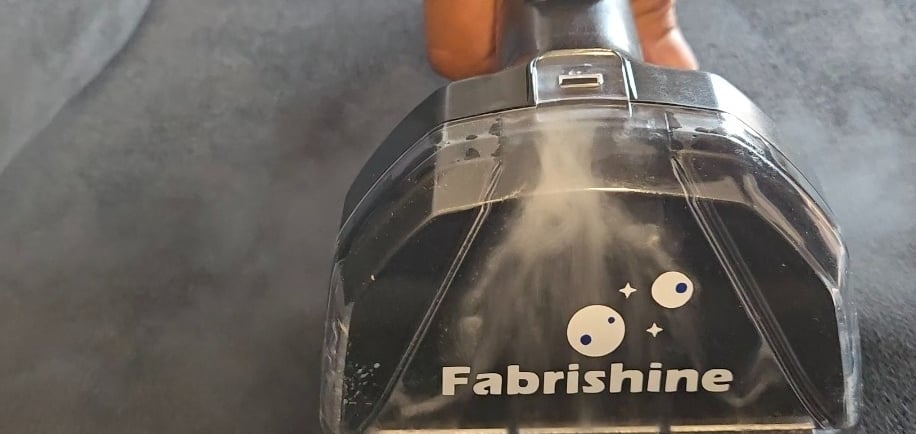
Step 6 — Steam Cleaning at 160°C for Maximum Results
For the deepest possible clean — particularly on heavily soiled furniture, pet-contaminated upholstery, or any situation where genuine sanitization is a priority — steam cleaning at 160°C elevates the results to an entirely different level.
At 160 degrees Celsius, steam does something that no cleaning solution alone can match: it kills bacteria, dust mites, mould spores, and viruses on contact. This is not just about visible cleanliness — it is about true sanitization at a microscopic level, deep inside the fabric where no brush or eye can reach.
Why 160°C specifically?
At this temperature, steam destroys 99.9% of common bacteria, allergens, and pathogens within seconds of contact with the fabric surface
It penetrates deep into the fibres and padding where extraction wands and brushes cannot physically reach
It naturally deodorizes without relying on chemical fragrances — the odour is genuinely destroyed, not masked
It is completely safe for children and pets — no chemical residue is left behind whatsoever
Steam cleaning at 160°C is especially recommended for:
Homes with babies, young children, or elderly residents
Anyone in the household suffering from allergies or asthma
Upholstery that has been exposed to pet accidents or repeated food and liquid spills
Furniture that has not been professionally cleaned in more than two years
Any situation where true sanitization — not just surface cleaning — is the goal
When applied as the final step of the complete professional process — vacuum → pre-treat → soft rotating brush (220–340 RPM) → hot water extraction → steam at 160°C — the transformation is remarkable. Colours appear noticeably brighter, fabric feels softer and lighter, odours are completely eliminated at the source, and the furniture looks and genuinely is clean from the surface all the way through to the padding.
How Often Should You Have Your Upholstery Professionally Cleaned?
SituationRecommended FrequencyGeneral household useEvery 12–18 monthsHomes with petsEvery 6–12 monthsHomes with young childrenEvery 6–12 monthsAllergy or asthma sufferersEvery 6 monthsHigh-traffic commercial seatingEvery 3–6 months
Between professional cleanings, vacuum your upholstery at least once a week and address spills immediately by blotting — never rubbing — with a clean white cloth, working from the outside of the stain inward.
Common Upholstery Cleaning Mistakes to Avoid
Rubbing stains instead of blotting — rubbing spreads the stain wider and pushes it deeper into the fibres. Always blot gently from the outer edge inward.
Using too much water — over-wetting upholstery leads to mould and mildew growth inside the cushion padding. You won't see or smell it until it has become a serious and expensive problem.
Skipping the vacuuming step — applying any liquid to an unvacuumed fabric turns dry dirt into mud and drives it further into the fibre structure rather than removing it.
Using the wrong cleaning product — household items like dish soap, bleach, and all-purpose sprays can permanently discolour or deteriorate upholstery fabric. Always use products specifically formulated for upholstery.
Ignoring the care tag code — this is the single most common and costly mistake homeowners make. Always check the code before you begin any cleaning process.
Skipping professional cleaning too long — leaving upholstery uncleaned for years doesn't just affect appearance. Embedded dirt, bacteria, and allergens compound over time and become significantly harder and more expensive to remove.
When to Call a Professional
Some situations go beyond what a homeowner can safely handle at home, no matter how careful:
Deep-set stains that have been present for weeks or months
Strong, persistent pet odours that have soaked into the cushion padding
Delicate "S" or "X" coded fabrics such as silk, velvet, or antique upholstery
Any sign of mould or mildew detected in the cushions or frame
A full professional deep clean and sanitization using industrial-grade steam equipment
At Fabrishine Cleaning and Maintenance, we bring professional-grade soft rotating brush equipment calibrated to the safe 220–340 RPM range, industrial hot water extraction systems, and 160°C steam technology directly to your home in Edmonton and the surrounding area. We follow this complete process on every single job — because your family deserves more than a surface clean.
Ready for a Professional Upholstery Clean in Edmonton?
If your furniture is overdue for a proper deep clean, we would love to help. Fabrishine serves Edmonton and surrounding communities with professional upholstery, carpet, and deep cleaning services delivered with care and expertise.
Call or text: 587-545-1334 Website: fabrishine.com Email: info@fabrishine.com
Your furniture works hard for your family every single day. Give it the professional clean it deserves.
© 2026 Fabrishine Cleaning and Maintenance Ltd. | Edmonton, AB | All rights reserved.